A culture of reinvention: trust and better questions
The world is on fire and adaptation and reinvention is on most leader’s minds.
It’s on mine at least.
I think a lot about how more people can be creative in their work, because after all, reinvention is an act of creativity.
It’s something we can all do if given the right tools, and one of those tools is some kind of psychological safety.
It may be a bit of a cliche term these days, and possibly a tad ironic in a world feeling less safe, but what does that term mean, and what about safety is useful?
Psychological safety is defined as a shared sense of permission for candor. It is about the absence of interpersonal harm and that it is acceptable to take risks associated with asking questions, admitting mistakes, and disagreeing with colleagues. (Wikipedia link)
It is not about feeling comfortable or free from anxiety.
Safety is about being free from harm and danger.
That’s a clear distinction, and it comes from the trust that personal discomfort is okay as part of the process of change and development.
There’s obviously a range here, and each organisation will need to anchor themselves in their correct zone, but generally, discomfort won’t hurt anyone. But conversely, coddling will harm your organisation.
I will also say that I don’t think intense psychological safety works as an “always on” approach to work life.
There should be a foundation of trust, of course, but the workplace is a messy environment because people are wonderfully messy.
We have short attention spans, we revert to habit, we forget because there are bigger, or smaller, more pressing issues to deal with.
As colleagues we’re also on different wavelengths, managing a variety of situations as individuals, and we’re not constantly aware of group dynamics and rules of engagement. It’s natural to make unwitting mistakes.
On top of that, expressing creativity is a high risk behaviour in organisations that have low trust.
Sharing a creative idea is so personal, it is almost a piece of you, that its rejection can feel very uncomfortable. Who wants that feeling? I’ve shared ideas for 25 years and I still secretly dread rejection.
It’s also important to acknowledge that people at every level of an organisation feel like this; mid-level doesn’t feel safe and C-suite doesn’t feel safe, so how is anyone supposed to be a creative problem solver when there is no space to imagine and fail?
Iteration and optimisation are still dependable processes, but the world is demanding significant leaps to adapt to change.
More and more often, it’s time to reinvent, but organisational cultures aren’t ready for this constant pressure.
If you’re a leader who needs to challenge the status quo, improve quality radically, gather some crazy ideas, plan for the unthinkable, or innovate in any way, you need to give yourself the best chance of success and harness the ideas in your team.
Here is a practical suggestion based on my experience as a creative leader in advertising and technology, and as a creative coach for organisations of all kinds.
When it comes to setting up psychological safety it’s better to facilitate a time-boxed process that focuses on a goal.
This way the team trusts the feedback rules, how long they can play, and that something will change after they have participated.
It’s important to frame the goal as a question.
When it comes to divergent thinking, making long distance connections, or exploring an area, a good question gives you strategic direction and freedom to imagine.
It’s easier to try many ideas out when you don’t need to have the “right” answer in the room.
In our practice we always follow four steps: Understand the question, Explore the space, make it Relevant, and Equip ourselves to succeed.
When the goal is to harness the unique creativity of everyone in the room to make change quickly, it’s important that everyone feels included and their contributions valued. That’s just good manners and it builds that much needed trust.
On the flip side, the team gets the gift of a challenge that is engaging and useful to solve, and to learn from the different perspectives around them. This encourages empathy and alignment in the team.
I believe every person is creative, it’s our special human power, and it’s expressed differently in all of us, and co-creation is a great way to come up with novel solutions that have depth and breadth.
We just need a way to participate wholeheartedly and a pragmatic approach to psychological safety is a key ingredient.
I believe the sanest reaction to a world that feels unsafe is for leaders to help their communities, colleagues and teams find the headspace and trust to create a better one.
We have big questions to answer together.
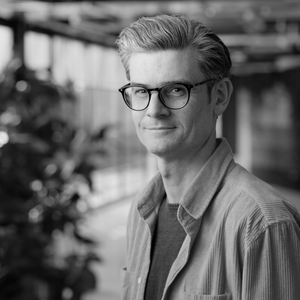
Written by Ivan Pols
My work is focused on championing inclusive and in-house creativity, developing the role of creativity in organisational culture, and collaborating with the growing community of leaders in this space.
I’m the co-founder of Truth & Spectacle, a practice that helps organisations unlock their creativity to make big leaps. I am also the Chief Creative Officer at what3words - a geolocation tech company that is making precise addresses available to everyone.
More reading from this article
Core Articles and Reports on Psychological Safety
"Psychological safety and the critical role of leadership development" (McKinsey)
https://www.mckinsey.com/~/media/McKinsey/Business%20Functions/Organization/Our%20Insights/Psychological%20safety%20and%20the%20critical%20role%20of%20leadership%20development/Psychological-safety-and-the-critical-role-of-leadership-development-final.pdf
"Can Workplaces Have Too Much Psychological Safety?" (PsychSafety.com)
https://psychsafety.com/can-workplaces-have-too-much-psychological-safety/
Related research paper cited in the text: https://doi.org/10.1016/j.obhdp.2023.104255
Related HBR article cited in the text: https://hbr.org/2024/01/can-workplaces-have-too-much-psychological-safety
"What People Get Wrong About Psychological Safety" (AAPL / Harvard Business Review)
https://www.physicianleaders.org/articles/what-people-get-wrong-about-psychological-safety
"Psychological safety: Creating a workplace where all thrive" (Journal of Accountancy)
https://www.journalofaccountancy.com/issues/2024/mar/psychological-safety-creating-a-workplace-where-all-thrive/
"The Dark Side of Psychological Safety" (Medium)
https://medium.com/@ss-tech/the-dark-side-of-psychological-safety-9abc464e21bc
Academic Research Papers
"How Psychological Safety Affects Team Performance: Mediating Role of Efficacy and Learning Behavior" (PubMed Central)
https://pmc.ncbi.nlm.nih.gov/articles/PMC7393970/
"The Role Of Psychological Safety In Enhancing Radical Candor And Effective Team Dynamics" (IOSR Journal)
https://www.iosrjournals.org/iosr-jbm/papers/Vol26-issue11/Ser-13/H2611135357.pdf